Why Memorization Isn’t Enough for the BCBA® Exam (And What Actually Works)
The Real Challenge of the BCBA Exam
If you’re preparing for the BCBA exam, you’ve likely felt caught between two frustrating experiences:
- Trying to memorize everything and still feeling unprepared
- Understanding the content, but struggling to apply it in scenario questions
 This leads many candidates to ask:
What am I missing?
The answer usually isn’t just more studying.
It’s a different approach.
Success on the BCBA exam doesn’t come from memorization alone—and it doesn’t come from intuition alone either.
It comes from the ability to move fluidly between the two.
The Missing Link: Fluency → Application
Let’s define two critical skills:
Fluency
Your ability to quickly and accurately recognize and understand key terms and concepts.
Application
Your ability to use those concepts to make decisions in real-world (or scenario-based) situations.
Many study approaches tend to emphasize one and underdevelop the other.
- Fluency without application leads to confusion
- Application without fluency leads to guessing
What you actually need is both working together.
Fluency is what enables effective application, especially under time pressure.
The BCBA Exam Success Framework
To study more effectively, you need a structure that reflects how the exam actually works.
Step 1: Build Fluency
Before you can apply concepts, you need to recognize them quickly and confidently.
This doesn’t mean memorizing definitions word-for-word.
It means developing functional fluency:
- recognizing terms instantly
- understanding what they mean in context
- distinguishing between similar concepts
Effective ways to build fluency:
- active recall (testing yourself, not rereading)
- spaced repetition over time
- short, frequent definition drills
Fluency reduces hesitation, and hesitation is often what leads to errors under pressure.
 Step 2: Practice Interpretation
This is where many candidates start to feel stuck.
Scenario questions are not just testing what you know; they’re testing whether you can correctly interpret what’s happening.
Ask yourself:
- What is this scenario actually describing?
- What details matter, and which are distractions?
- What concept is being tested here?
The goal is to move from:
“I recognize these terms”
to
“I understand what this situation represents”
(This is essential on the exam and just as important in practice.)
 Step 3: Make the Decision
Once you’ve interpreted the scenario, the final step is selecting the best answer.
This is not always about finding something that is technically correct.
It’s about identifying what is:
- most appropriate given the context
- aligned with ethical and clinical standards
- consistent with the principle being tested
Strong decision-making comes from combining:
- fluency (you understand the concepts)
- interpretation (you understand the situation)
What This Looks Like in Practice
Imagine you’re presented with a scenario involving a learner’s behavior and a change in intervention.
 If your fluency is strong, you can quickly recognize:
- the type of procedure being used
- the relevant behavioral principles
Instead of spending time decoding terms, you can focus on:
- what is actually happening
- what the question is asking
- which response best fits the situation
That shift alone can dramatically improve both accuracy and confidence.
Common Mistakes (Even Among Strong Candidates)
Many candidates who know the material still struggle because of how they approach questions.
Here are three common pitfalls:
1. Memorizing without context
You know the definitions, but can’t apply them under pressure.
2. Trying to reason without fluency
You attempt to “figure it out,” but lack the speed and clarity needed to do so effectively.
3. Overcomplicating questions
You assume the question is harder than it is and talk yourself out of the correct answer.
How to Study Using This Framework
Instead of focusing only on content review, shift your study approach:
- Practice recalling definitions quickly and accurately
- Work through scenario questions step-by-step
- Explain your reasoning out loud
- Focus on why an answer is correct, not just what the answer is
This builds both fluency and application simultaneously.

Final Thought
The goal isn’t to memorize everything.
And it’s not to rely on instinct.
The goal is to become fluent enough that you can think clearly and apply what you know under pressure.
When you build both fluency and application, the exam becomes far more manageable than it first appears.
Next Step
Understanding what works is an important step, but applying it consistently is what leads to real improvement.
If you’re ready for a clear, repeatable way to approach exam questions, keep an eye out for the upcoming BCBA Exam Success Framework: Question Guide, and download your copy when it becomes available.
Want to Go Deeper?
If you’re looking to strengthen both your fluency and your ability to apply concepts in real exam scenarios, explore these resources:
- Study Methods That Work
https://www.abatechnologies.com/blog/study-methods-that-work-8-study-strategies-for-the-bcbar-exam - Beyond Rote Memorization
https://www.abatechnologies.com/blog/beyond-rote-memorization-the-importance-of-fluency-in-bcbar-exam-prep - Scenario Question Breakdowns
https://www.youtube.com/watch?v=Xh6w807kJEY
These are designed to help you move from understanding → confidence → performance.
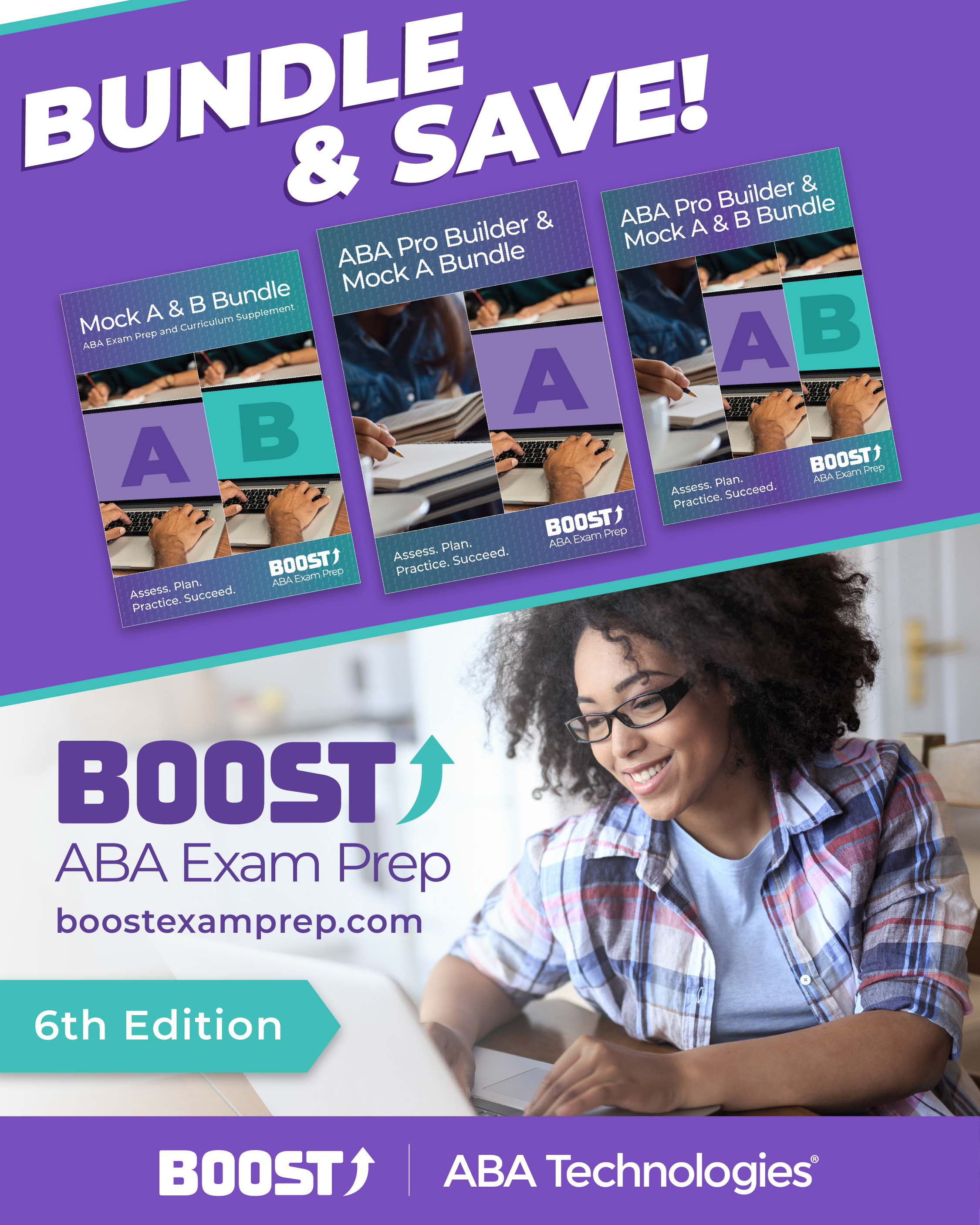
BOOST Bundles
Designed by experts with students in mind, BOOST products aim to help students identify their strengths and weaknesses, build knowledge in critical verbal competencies, and overcome barriers and anxieties to succeed in their path to behavior analysis certification and beyond.