

Recently Added
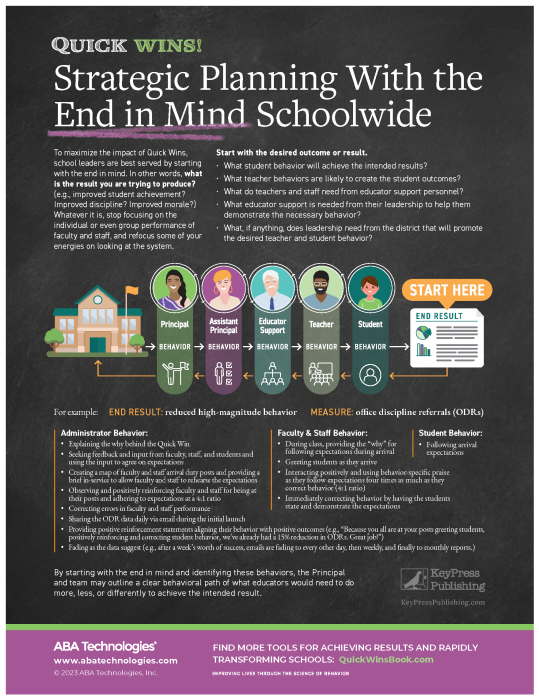
Quick Wins Strategic Planning With the End in Mind School wide
To maximize the impact of Quick Wins, school leaders are best served by starting with the end in mind. In other words, what is the result you are trying to produce?
All Infographics
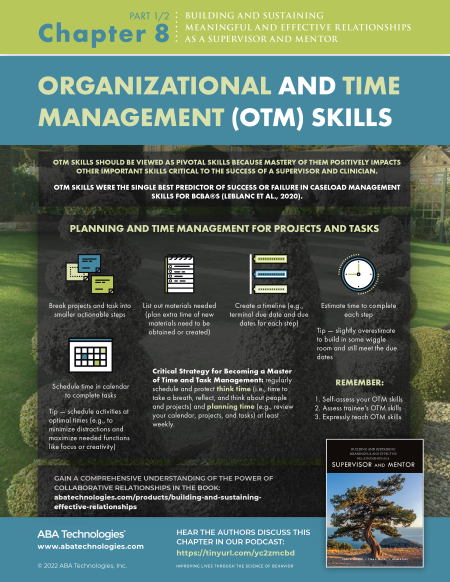
Organizational and Time Management (OTM) Skills Part 1
OTM Skills should be viewed as pivotal skills because mastery of them positively impacts other important skills critical to the success of a supervisor and clinician.

Structured Problem Solving Skills Part 2
“The supervisor who focuses on teaching problem-solving skills is programming for the supervisee’s future independence and success by teaching them how to solve future problems, rather than simply providing a solution to the current problem.”

Structured Problem Solving Skills Part 1
“The supervisor plays a critical role in helping the supervisee overcome any avoidance contingencies that may be preventing them from noticing or reporting problems.”

Learning From Experts & Self Management
Supervisors should expressly teach trainees how to engage in observational learning to facilitate growth and development well past the supervisory relationship.

Using a Competency-Based Approach to Supervision
"The full scope of skills that a supervisor might teach is too large to leave unplanned."
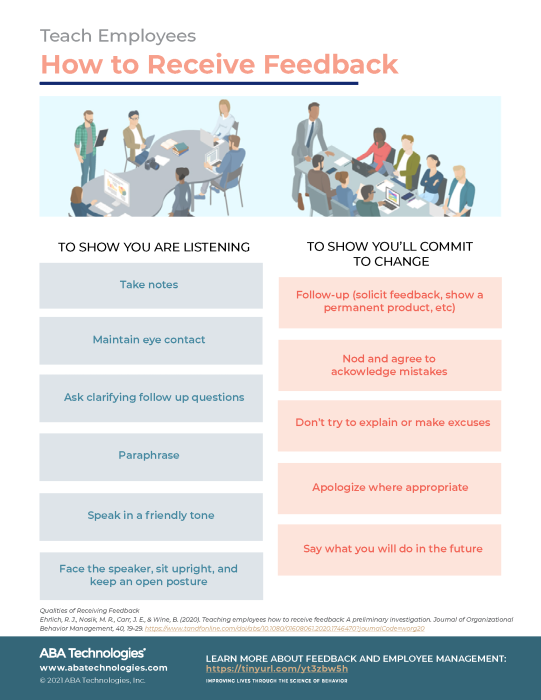
Teaching Employees How to Receive Feedback
How to show you are listening and to show you are committed to change

Building Collaborative Supervisory Relationships
Effective supervisory relationships require a strong foundation built from collaboration and a clear commitment to the ultimate outcomes of the relationship.

The Impact of Culture on a Supervisory Relationship
The world is comprised of people of varied life experiences, values, and ways of acting in the world. The people we supervise and the people we serve will benefit from our responsiveness to variations and our tenderness in approaching relationships.

Tending to Your Tree - Cultivating Your Continued Growth as a Supervisor Part 3
CHAPTER 3, PART 3: The wise behavior analyst will determine for themselves which skills in their behavior analytic or supervisory skill set still need refining.